
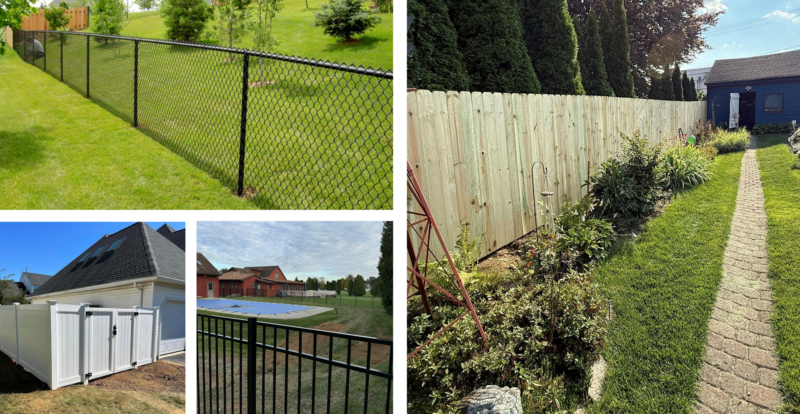
One of the most cost-effective fence materials: simple steel wire mesh, quick to install.
Durable and low-maintenance: a basic galvanized chain link won’t rot like wood.
Good for visibility and security: you can see through it, so it’s useful for backyards, business perimeters, playgrounds.
Versatility: available in different gauges, heights, and coatings (e.g., vinyl coated) for different needs.
Aesthetics: chain-link tends to be viewed as more functional than decorative, less “finished” than wood or vinyl.
Privacy: standard chain link offers very little privacy. If you want privacy you’ll need add-ons.
Corrosion risk: while many are galvanized or coated, in harsh climates rust and corrosion can still be a concern.
Privacy slats: Vinyl or aluminum slats can be woven through the mesh to block views, add color, or mimic wood grain.
Vinyl coating: Instead of bare galvanized steel, chain link with a vinyl-coated finish gives a cleaner look and more color options.
Post caps or decorative tops: Ornamental post caps, lighting, or contrasting colors can elevate the look.
Gate hardware and ornamental gates: Upgrading to decorative gate hardware, arched tops, or operator motors adds both functionality and style.
Low maintenance: no painting, no staining, resistant to rot and insects.
Variety of styles, colors, and textures: you can choose picket, privacy, ranch-rail, and colors beyond just “white.”
Long lifespan: good quality vinyl fences can last decades with minimal upkeep.
Up-front cost: typically higher initial cost than simple chain link or basic wood.
Less natural look: while vinyl has come a long way, some people still prefer the warmth of wood.
Potential brittleness or warping in extreme conditions: some vinyl may not perform as well in high winds or extreme cold.
Color and style limitations: though styles are improving, you may still have fewer color options than custom-painted wood.
Post caps & lighting: Vinyl fences often support decorative post caps or solar lighting to turn fence posts into accent features.
Lattice tops: Adding a lattice top to a privacy vinyl panel brings decorative height and visual interest.
Curved rails or custom shapes: Some vinyl systems offer curved top rails or designer picket patterns.
Color/textures: Many vinyl fences now come in wood-grain textures or muted colors rather than just bright white.
Elegant, decorative look: Aluminum gives a refined, wrought-iron aesthetic without the rust and heavy maintenance.
Very low maintenance: doesn’t rot, peel, or rust, and typically only needs occasional cleaning.
Durable and lightweight: easier to install than heavier steel or wrought iron, less susceptibility to warping than wood.
Less privacy: most aluminum fences are open style (pickets or rails) rather than solid panels.
Higher cost: initial investment typically higher than chain link and sometimes more than vinyl depending on style.
Vulnerability to impact: while durable, aluminum can bend or dent if struck strongly.
Decorative scrolls or cast-iron-look accents: Many aluminum fences offer decorative tops, finials, scrolls, and custom colors.
Privacy slat or horizontal slat versions: While typical picket styles are open, there are horizontal aluminum slat fences or full privacy panels for a more modern look.
Color finishes & powder coating: Beyond standard black or white, many systems offer textured finishes or dual-tone accents.
Matching gates, arches, estate double-gates: Aluminum systems often have matching gate systems with arch tops, estate features, and hardware that elevate the look.
Natural, classic look: wood brings warmth and blends with landscapes, gardens, and many home styles.
Highly customizable: height, style (board-on-board, picket, shadowbox, rail), and finish (paint or stain) are all flexible.
Good for privacy and noise reduction: solid wood panels or board-on-board styles can provide a complete visual and acoustic barrier.
Eco-friendly potential: if sourced responsibly, wood is a renewable resource.
Maintenance: wood fences require periodic staining, sealing, painting, and repairs for rot or warping.
Shorter lifespan: unless properly maintained, wood may last 10-15 years, less than vinyl or aluminum in harsh conditions.
Susceptible to weather and insects: moisture, termites, rot, and warping can degrade wood faster than non-wood materials.
Variation in quality: the type of wood (cedar, pine, treated, etc.) and installation quality matter a lot.
Staining or painting: Customize color to match your house, trim, or landscape.
Tops, caps & finials: Decorative post caps, finials, or contrasting trim can enhance a wood fence.
Lattice or trellis inserts: Adding lattice tops gives visual interest and can be used to support climbing plants.
Mixed-material combos: For example, wood fence with metal picket insets or decorative horizontals.
Custom gates and arches: A nicely crafted wooden gate with arched tops or cross-buck patterns can elevate the whole look.
When making your decision, consider:
Budget: Not just upfront cost, but long-term maintenance.
Privacy vs Visibility: Do you want to see through your fence or block the view?
Maintenance tolerance: Do you want “set it and forget it” or are you okay with stain/paint work?
Lifestyle & aesthetic: Your home style, neighborhood, landscaping, and how the fence complements those.
Decorative Enhancements: Even a basic fence becomes more appealing with the right add-ons (caps, gates, colors, textures).
Choosing the right fence is about balancing function and aesthetics—and each of these materials offers unique benefits to suit different needs and styles.
Every property is different. A historic home in Bucks County may call for classic wood, while a newer development in the Lehigh Valley might benefit from vinyl. Sloped properties in the Poconos often pair well with aluminum.
At Mette’s In & Out Construction, we don’t just install fences — we install solutions built to withstand our Northeast climate while enhancing your property’s value and appearance.